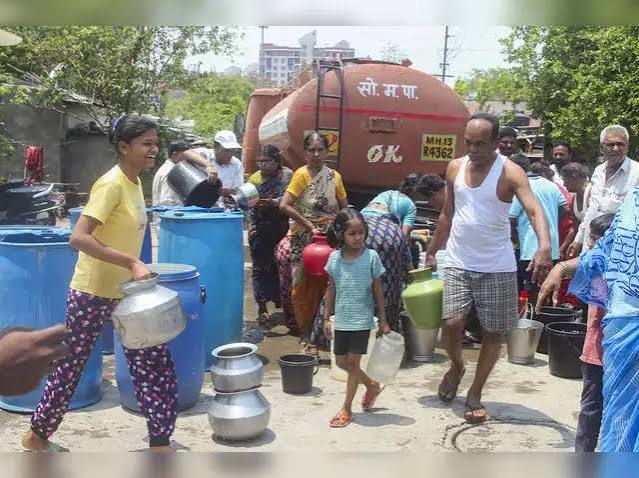
Mumbai, despite receiving over 2,000 mm of annual rainfall, faces severe water scarcity due to poor rainwater harvesting, ageing infrastructure, pollution, and high population density. In this challenging context, LEED certification has emerged as a powerful framework for driving meaningful water efficiency in buildings.
The LEED (Leadership in Energy and Environmental Design) rating system offers up to 12–15 points under the Water Efficiency (WE) category, making it one of the most impactful credit groups for cities like Mumbai.
Mumbai’s Water Crisis and the LEED Opportunity
Mumbai struggles with acute water shortages despite being a coastal megacity. The city loses nearly 40–50% of its water through leaky distribution networks, while erratic monsoons and saltwater intrusion further complicate the situation. Conventional buildings consume enormous quantities of freshwater for landscaping, flushing, and cooling towers — often the three largest water users.
LEED certification addresses these issues through a performance-based approach that delivers both environmental and economic benefits.
Key LEED Water Efficiency Credits Relevant to Mumbai
- Indoor Water Use Reduction (up to 6–7 points) LEED encourages the use of low-flow fixtures, sensor-based faucets, and waterless urinals. In Mumbai projects, this credit alone can reduce indoor water use by 30–50%. Many high-rise developments have achieved 40%+ reduction by installing dual-flush systems and aerators.
- Water Efficient Landscaping (up to 4–5 points) By using native, drought-tolerant plants and efficient irrigation systems (drip and subsurface), projects minimize or eliminate potable water use for landscaping. In Mumbai’s humid climate, this strategy significantly reduces irrigation demand.
- Cooling Tower Water Use (up to 2–3 points) Cooling towers in commercial buildings are major water consumers. LEED rewards higher cycles of concentration and alternative water sources (treated wastewater), which is highly relevant for Mumbai’s large office towers.
- Rainwater Harvesting & Stormwater Management Given Mumbai’s heavy monsoon rains and frequent flooding, capturing and reusing rainwater earns valuable credits while helping buildings become more resilient.
Real Impact: Mumbai Case Studies
Several landmark projects in Mumbai have successfully leveraged LEED certification to transform water performance. A prominent commercial tower in Bandra-Kurla Complex achieved LEED Gold by reducing potable water use by over 45% through a combination of rainwater harvesting, greywater recycling, and high-efficiency fixtures. Another residential township in Navi Mumbai earned exemplary performance points by treating and reusing 100% of wastewater for landscaping and flushing.
These projects demonstrate that LEED certification not only helps conserve Mumbai’s precious water resources but also delivers tangible financial returns through lower water bills and higher asset value.
The Way Forward
In water-scarce yet high-rainfall cities like Mumbai, LEED certification provides a structured, globally recognized pathway to responsible water management. With increasing water tariffs and stricter municipal regulations, developers who prioritize water efficiency are gaining a clear competitive edge.
The message is clear: In Mumbai’s context, water efficiency is no longer optional — it is essential for long-term resilience. LEED certification equips projects with credible, measurable strategies to tackle water scarcity while creating buildings that perform better for both occupants and the environment.
As climate change intensifies water stress across urban India, the role of LEED certification in driving responsible water use will only grow stronger.
References
Indian Green Building Council. (2024). IGBC green building rating system and water efficiency benchmarks. https://igbc.in
Joshi, P., & Patel, M. (2023). Water efficiency strategies in LEED-certified buildings: A case study of Mumbai. Journal of Cleaner Production, 392, Article 136289. https://doi.org/10.1016/j.jclepro.2023.136289
Kumar, R., & Sharma, A. (2022). Urban water scarcity and building-level water management in Mumbai Metropolitan Region. Urban Climate, 45, Article 101256. https://doi.org/10.1016/j.uclim.2022.101256
U.S. Green Building Council. (2023). LEED v4.1 Building Design and Construction: Water Efficiency credit library. https://www.usgbc.org/leed
U.S. Green Building Council. (2024). LEED water efficiency credits: Performance benchmarks and case studies. https://www.usgbc.org/resources
World Resources Institute. (2022). Aqueduct water risk atlas: Mumbai city profile. https://www.wri.org
Mukherjee, S., & Singh, A. (2023). Rainwater harvesting and wastewater reuse potential in high-rise buildings of Mumbai. Sustainable Cities and Society, 92, Article 104512. https://doi.org/10.1016/j.scs.2023.104512
JLL India. (2025). Sustainability trends in Mumbai real estate: Water efficiency and LEED certification. JLL Research Report.
TERI. (2023). Water management in urban India: Focus on buildings and LEED practices. The Energy and Resources Institute.
PwC India. (2024). Water resilience in real estate: Opportunities for Mumbai developers. PricewaterhouseCoopers Private Limited.