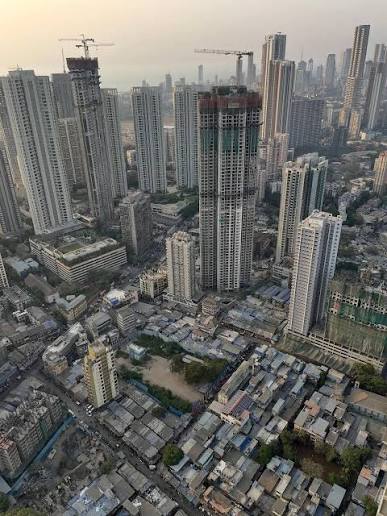
Mumbai's rapid urbanisation and growing demand for housing have made redevelopment an important part of the city's real estate landscape. Ageing residential buildings, limited land availability and increasing population density are driving redevelopment across areas such as Andheri, Goregaon, Borivali, Dadar and South Mumbai. While these projects provide opportunities to improve housing infrastructure and urban living conditions, they also present significant sustainability challenges. Integrating sustainable construction practices into redevelopment is therefore essential for building a climate-resilient Mumbai.
Key Sustainability Challenges in Redevelopment Projects
One of the major challenges is managing construction and demolition waste. Redevelopment projects involve dismantling existing structures, generating substantial quantities of concrete, steel, masonry and other debris. Improper segregation and disposal can increase pressure on landfills and contribute to environmental pollution. Implementing waste segregation, recycling concrete, recovering steel and reusing suitable materials can significantly improve resource efficiency.
Water management is another critical concern. Mumbai experiences seasonal water shortages as well as intense monsoon rainfall and urban flooding. Redevelopment projects must address both water conservation and stormwater management. Limited open spaces and extensive paved surfaces often reduce natural groundwater recharge. Rainwater harvesting, wastewater treatment and reuse, efficient plumbing fixtures and permeable landscaping are important green building solutions that can help reduce freshwater demand and manage runoff.
Energy consumption and urban heat are equally important considerations. Conventional buildings often rely heavily on mechanical cooling due to inadequate shading, inefficient building envelopes and limited natural ventilation. High-rise redevelopment can further increase cooling requirements if passive design strategies are overlooked. Incorporating energy-efficient lighting, high-performance glazing, solar photovoltaic systems, efficient air-conditioning and climate-responsive architectural design can reduce operational energy consumption.
The Role of Sustainability Consultants
Sustainability consultants play an important role in addressing these challenges from the initial planning stage. They work alongside developers, architects, structural engineers and project management teams to identify environmental risks and integrate sustainability measures into project design and execution.
Their responsibilities include conducting energy and water assessments, developing construction waste management plans, recommending low-carbon materials and evaluating opportunities for green building certification through frameworks such as IGBC, GRIHA and EDGE. They can also guide developers in incorporating climate-resilient features such as flood-conscious site planning, improved stormwater drainage, native landscaping and rooftop solar installations.
However, implementing these measures is not always straightforward. Developers must balance sustainability investments with project budgets, construction timelines, regulatory requirements and the expectations of existing residents. Limited construction space, difficult material transportation and the need to maintain safety in densely populated neighbourhoods further complicate implementation.
Building a More Sustainable Future
The Mumbai Climate Action Plan (MCAP), developed by the Brihanmumbai Municipal Corporation (BMC), outlines a roadmap towards a net-zero and climate-resilient city by 2050. It identifies urban flooding, extreme heat, air pollution, sustainable waste management and energy-efficient buildings as key priorities. These priorities make sustainability integration particularly relevant to Mumbai's redevelopment sector.
WRI India+1Ultimately, sustainable redevelopment should go beyond replacing old buildings with modern structures. It should focus on creating resource-efficient, environmentally responsible and climate-resilient communities. With the involvement of experienced sustainability consultants and the adoption of appropriate green building solutions, Mumbai's redevelopment projects can contribute significantly to the city's long-term environmental goals.
Bibliography
1. Brihanmumbai Municipal Corporation (2022). Mumbai Climate Action Plan: Towards a Net Zero and Climate Resilient Mumbai.
2. World Resources Institute (WRI India). Mumbai Climate Action Plan (MCAP).
3. Brihanmumbai Municipal Corporation. Development Control and Promotion Regulations (DCPR), 2034.
4. Indian Green Building Council (IGBC). IGBC Green Existing Buildings Rating System.
5. Brihanmumbai Municipal Corporation (2025). Climate Budget Report: FY 2025–26.