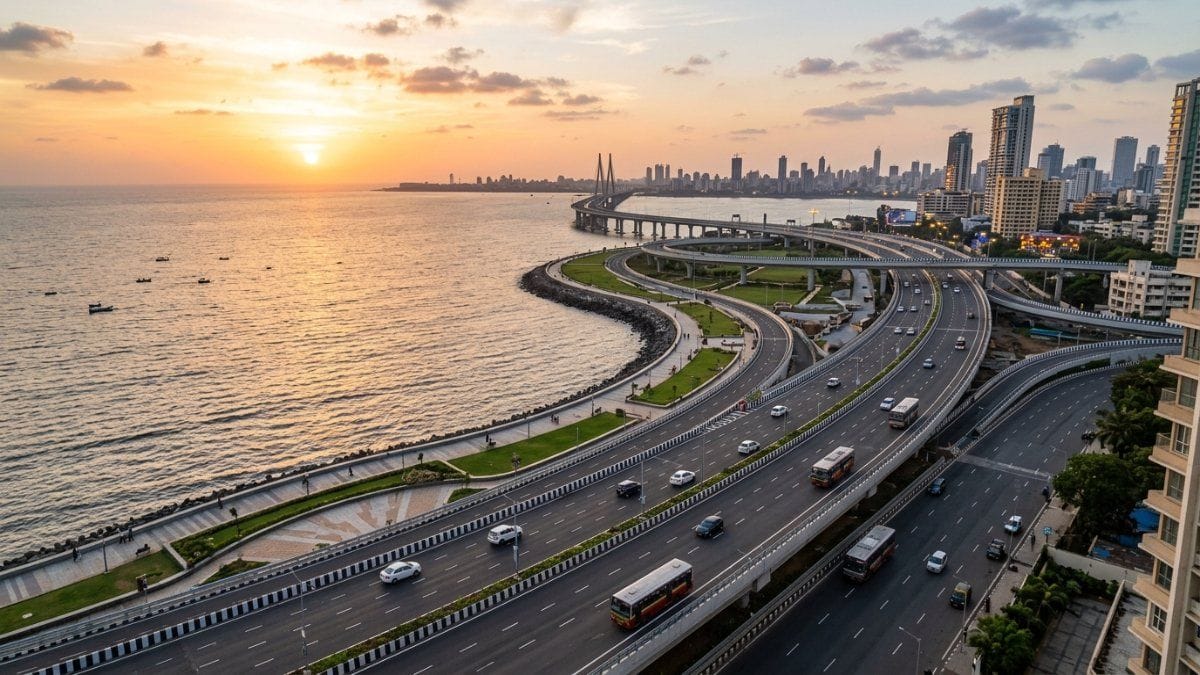
Mumbai’s unique coastal climate presents one of the most challenging environments for building design and construction in India. High humidity, intense monsoon rains, saline air, storm surges, and rising sea levels create a complex web of risks that conventional construction practices often fail to address. These conditions accelerate building degradation, increase energy demand, and threaten long-term structural safety. This is exactly why engaging expert green building consultants in Mumbai has become essential rather than optional.
Mumbai’s tropical coastal climate is characterized by relative humidity often exceeding 70–90% for much of the year, heavy rainfall concentrated in short bursts, and constant exposure to salt-laden sea winds. These factors cause rapid corrosion of steel, degradation of concrete, mold growth, and higher cooling loads. Studies on Mumbai’s urban heat island effect show that dense coastal developments can raise local temperatures by 4–7°C, significantly increasing air-conditioning requirements. Rising sea levels and intensified cyclones further heighten flood and erosion risks for buildings near the coastline.
The Limitations of Conventional Approaches
Standard building practices frequently underestimate Mumbai’s micro-climate challenges. Poorly designed envelopes allow moisture ingress, leading to higher maintenance costs and reduced building lifespan. Conventional HVAC systems struggle with dehumidification, resulting in excessive energy consumption. In such conditions, generic designs often lead to performance gaps, higher operational costs, and compromised occupant health.
This is where specialized green building consultants in Mumbai deliver critical value. They possess deep local knowledge of coastal wind patterns, CRZ regulations, micro-climatic variations, and material performance in saline environments. Their expertise enables climate-specific solutions such as:
- Advanced building envelopes with superior moisture barriers and corrosion-resistant materials
- Passive design strategies optimized for sea breezes and solar orientation
- High-efficiency dehumidification and cooling systems tailored for humid conditions
- Elevated structures and flood-resilient planning integrated with natural buffers like mangroves
- Salt-resistant landscaping and green infrastructure that enhances resilience
Proven Benefits and Performance
Research on green buildings in Mumbai demonstrates that climate-responsive designs can reduce energy consumption by 30–40% and improve indoor comfort significantly. Green building consultants in Mumbai also help projects achieve IGBC, GRIHA, and LEED certifications while qualifying for green incentives and faster approvals. Their early involvement through integrated design processes prevents costly retrofits later and ensures buildings perform as intended in real coastal conditions.
In an era of accelerating climate change, Mumbai’s high-density coastal developments need more than generic sustainability — they require hyper-local expertise. Seasoned green building consultants in Mumbai bridge the gap between global best practices and the city’s unique environmental realities, delivering buildings that are resilient, efficient, and future-ready.
The message is clear: In Mumbai’s coastal climate, sustainability success depends heavily on specialized local knowledge. Developers and owners who partner with experienced green building consultants in Mumbai are not just building structures — they are creating durable, high-performance assets that withstand the city’s harsh conditions while contributing to a more resilient urban future.
References
Indian Green Building Council. (2024). IGBC green building rating system for coastal regions. https://igbc.in
Kotharkar, R., Bagade, A., & Singh, A. (2020). Urban heat island in Mumbai: A case of tropical coastal megacity. Sustainable Cities and Society, 63, Article 102492. https://doi.org/10.1016/j.scs.2020.102492
Mani, M., & Reddy, B. V. V. (2022). Climate-responsive design strategies for buildings in coastal regions of India. Energy and Buildings, 268, Article 112189. https://doi.org/10.1016/j.enbuild.2022.112189
Ministry of Environment, Forest and Climate Change. (2022). Coastal Regulation Zone (CRZ) Notification 2019: Implementation challenges in Mumbai. Government of India.
Sharma, R., Pradhan, L., & Kumar, S. (2021). Impact of coastal climate on building performance in Mumbai Metropolitan Region. Urban Climate, 38, Article 100892. https://doi.org/10.1016/j.uclim.2021.100892
TERI. (2023). Climate risk assessment for buildings in coastal cities: Mumbai case study. The Energy and Resources Institute.
World Green Building Council. (2022). Resilient cities and buildings: Adapting to coastal climate risks. https://worldgbc.org
Zope, P. E., Eldho, T. I., & Jothiprakash, V. (2023). Flood risk assessment and climate resilience strategies for Mumbai city. Journal of Hydrology: Regional Studies, 45, Article 101312. https://doi.org/10.1016/j.ejrh.2023.101312